.png)

Blogs and insights
House Extension Cost UK 2026: Full Price Breakdown
📅 Published on
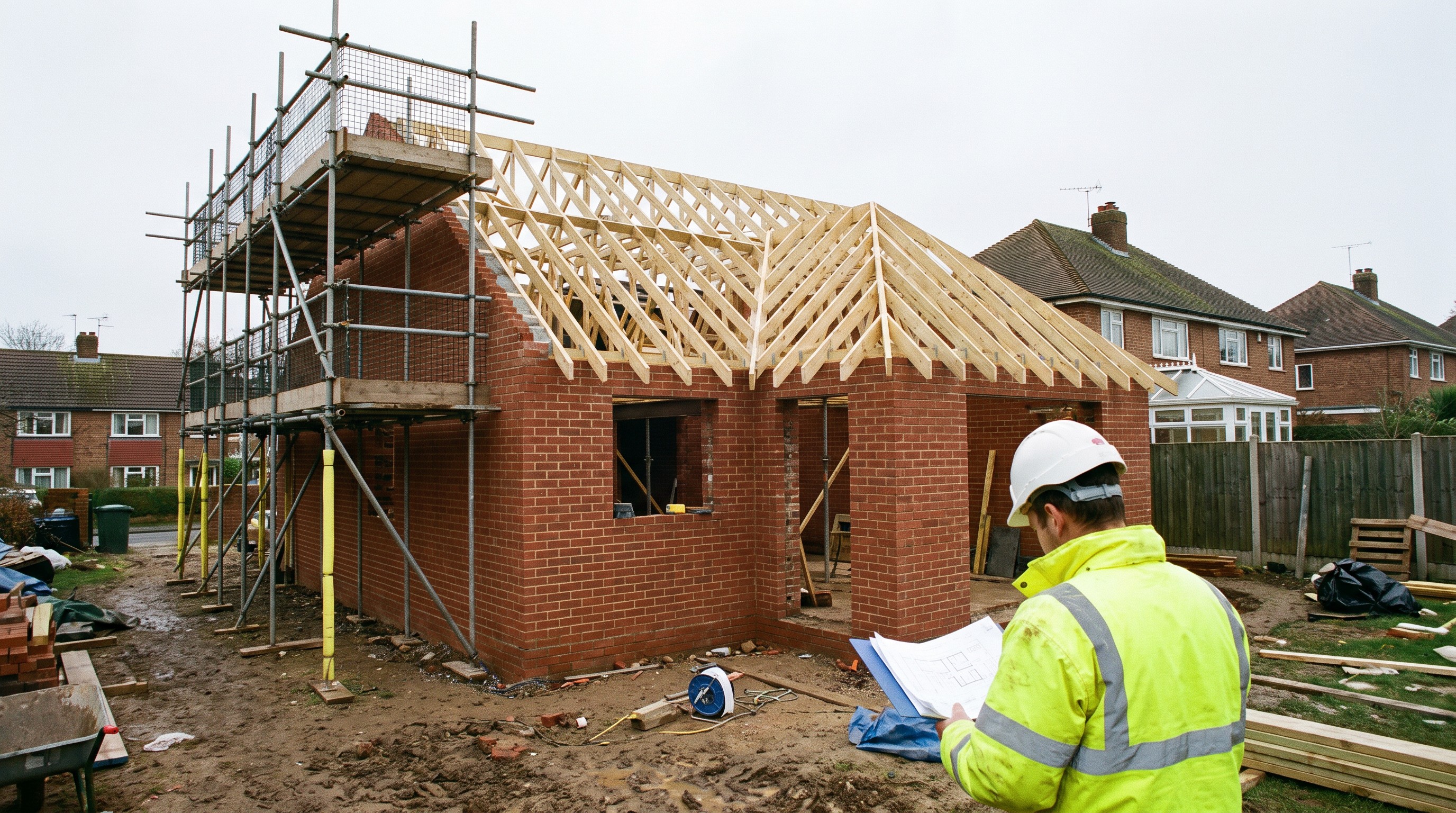
How much does a house extension cost UK-wide is the first question every homeowner asks before they call a builder, and the honest answer is somewhere between £1,800 and £3,200 per square metre depending on the type of extension, the finish level, and where in the country you live. That range covers everything from a basic single-storey rear extension to a more complex wraparound build with structural glazing and a new kitchen fit-out. Get the square metreage and the specification wrong at the budgeting stage and you either scrap the design or run out of money halfway through the build.
This guide breaks the numbers down by extension type, explains what actually drives the price up or down, and gives realistic figures for homeowners in Northampton, Corby, Kettering and the wider Northamptonshire area. It also covers the cost variable most national guides skip entirely: groundworks, and why subcontracting them out is one of the most common ways extension budgets blow past their original estimate.
Average House Extension Costs by Type
Extension costs in the UK are almost always quoted per square metre because it's the only figure that lets you compare different designs fairly. A small, simple box extension will always cost less per square metre than a large one with bifold doors, a vaulted ceiling, and a full kitchen refit, even though the larger job costs more overall.
Single-Storey Rear Extension
A single-storey rear extension typically costs between £1,800 and £2,600 per square metre for a standard specification: brick or block build, a flat or pitched roof, standard windows, and a plastered finish ready for your own kitchen or flooring. For a typical 20–25 square metre rear extension, that puts total costs at roughly £40,000 to £65,000 including groundworks, but excluding kitchen units, appliances, and furnishing.
Side Return Extension
Side extensions, particularly the narrow side-return infill common on terraced and semi-detached houses, run slightly higher per square metre — usually £1,900 to £2,900 — because the smaller footprint means fixed costs like scaffolding, foundations, and access don't spread across as much floor area. A 10–15 square metre side return commonly lands between £22,000 and £40,000.
Wraparound Extension
A wraparound extension, which combines a rear and side extension into a single L-shaped space, is the most expensive per square metre — typically £2,000 to £3,200 — because the structural work is more complex, there's more roof junction detailing, and most wraparounds include larger glazed openings or roof lanterns. A 35–45 square metre wraparound often totals £80,000 to £130,000.
These figures assume a mid-range specification. Basic finishes with standard windows and no structural glazing sit at the bottom of each range. High-end specifications with bifold or sliding doors, underfloor heating, and vaulted ceilings with roof lanterns push towards the top, and sometimes beyond it in London and the South East.
What Affects the Cost of Your Extension
Square metreage sets the baseline, but several other factors move the final number significantly, and homeowners are often surprised by which ones matter most.
• Groundworks and site conditions: sloping gardens, high water tables, or clay soil that requires deeper foundations can add thousands before a single brick is laid.
• Glazing and openings: bifold doors, roof lanterns, and large structural glazing units cost considerably more than standard windows and add to the structural engineering required.
• Roof design: a flat roof with a single ply membrane is cheaper than a pitched or vaulted roof matching the existing house.
• Party wall agreements: side and wraparound extensions on terraced or semi-detached properties often trigger the Party Wall Act, adding surveyor fees and time.
• Kitchen and interior fit-out: many rear extensions are built to house a new kitchen-diner, and appliances, units, and worktops are rarely included in a builder's quote.
• Planning permission route: extensions built under permitted development are generally cheaper to progress than those requiring full planning permission, which adds fees and time. The Planning Portal's extensions guide sets out which projects qualify.
Before committing to a design, it's worth reading the government's overview of when planning permission is required in England and Wales, since getting this wrong can add months and legal costs to a project that otherwise looked straightforward on paper.
House Extension Costs in Northampton, Corby and Kettering
Northamptonshire sits below London and the South East on the national cost curve, which is good news for local homeowners budgeting a project. A house extension in Northampton typically prices at the lower-to-mid end of the national range — around £1,700 to £2,400 per square metre for a standard single-storey rear extension — reflecting lower labour and material transport costs compared with the capital.
House extension costs in Corby and house extension costs in Kettering follow a similar pattern, generally sitting within £1,650 to £2,300 per square metre for a comparable specification. Wellingborough, Daventry, and Towcester see similar figures, with variation driven more by site conditions and design complexity than by town.
If you're comparing quotes across these areas, our detailed home extension guide for Wellingborough homeowners covers local planning routes and typical project timelines specific to that area, which is useful context if you're weighing up whether to build now or wait.
Where the Money Really Goes: Groundworks and Hidden Costs
Most extension cost guides quote a single figure per square metre and leave it there, but the breakdown matters more than the headline number. Groundworks, foundations, and drainage typically account for 15–20% of total project cost, and this is the stage where subcontracted builds most commonly run over budget.
When a main contractor subcontracts groundworks to a separate excavation firm, every delay, every unexpected drainage run, and every change to foundation depth becomes a negotiation between two businesses, with you paying for the coordination gap. Working with a contractor that handles home extensions and groundworks in-house removes that layer entirely — the same team excavating your foundations is accountable for the finished build, so there's no dispute over who pays for a change mid-project.
Tip: Ask any builder quoting your extension whether groundworks are in-house or subcontracted. It's one of the clearest signals of how tightly the project will be managed once digging starts.
Hidden costs that catch homeowners out include structural engineer fees (typically £500–£1,500), building control fees (£300–£800 depending on local authority), skip hire and waste removal, temporary services if you're extending over existing utilities, and making good internally where the extension meets the existing house. None of these show up in a simple per-square-metre estimate, but all of them appear on the final invoice.
Common Mistakes That Blow the Extension Budget
1. Pricing off a national average alone: Regional labour and material costs vary enough that a London-based average is unhelpful for budgeting a Northamptonshire project.
2. Forgetting the kitchen fit-out: Many rear extensions exist to create a kitchen-diner, but units, appliances, and worktops are rarely part of a build quote.
3. Underestimating groundworks: Sloping sites, high water tables, and clay soil all add foundation depth and cost that only become clear once excavation starts.
4. Skipping the Party Wall process: Ignoring or delaying party wall notices on shared boundaries can stall a project for weeks.
5. Choosing the cheapest quote without checking scope: A low quote that excludes groundworks, building control fees, or making good will always be more expensive than it looks once the full project is priced.
6. Not checking permitted development limits: Building beyond permitted development thresholds without applying for planning permission risks enforcement action later. The government's permitted development technical guidance sets out the exact limits by extension type.
If you're also weighing up other exterior improvements alongside an extension, our breakdown of driveway costs in Northamptonshire is a useful companion piece for homeowners planning a wider property upgrade rather than a single project.
Get a Home Extension Quote in Northamptonshire Today
Budgeting an extension without a site visit only gets you so far — sloping gardens, drainage runs, and existing foundations all shift the real number once someone's actually on site. Link Construction & Landscaping handles design, groundworks, brickwork, and finishing in-house across Northampton, Corby, Kettering, and the wider county, so the same team that digs your foundations is the team that hands you the keys.
Request your free, no-obligation quote or call +44 7736 650266 for fast, local service in Northamptonshire.
Frequently Asked Questions
How much does a 20 square metre house extension cost in the UK?
A 20 square metre single-storey rear extension typically costs between £36,000 and £52,000 at a standard specification, before kitchen units, appliances, or furnishing are added.
Is it cheaper to extend or move house?
Extending is usually cheaper than moving once stamp duty, estate agent fees, and moving costs are factored in, particularly for homeowners who are otherwise happy with their location and simply need more space.
Do I need planning permission for a house extension?
Many single-storey rear extensions fall under permitted development and don't require full planning permission, but this depends on size, boundary proximity, and whether you've extended before. Check current limits on the Planning Portal before finalising your design.
How long does a house extension take to build?
A single-storey rear extension typically takes 10–16 weeks from groundworks to handover, depending on size, weather, and whether structural glazing or a kitchen fit-out extends the finishing stage.
Why is groundworks cost so hard to estimate upfront?
Foundation depth, soil type, and drainage requirements aren't fully known until excavation begins, which is why groundworks costs are the most common source of budget overruns on extension projects.
Does an extension add value to a house in Northamptonshire?
A well-built single-storey rear or side extension typically adds 10–15% to a property's value in Northamptonshire, though the exact figure depends on the local market and how the added space is used.


.svg)